From Desert Sun to Grid Power – How We Delivered 10 Solar PV Stations in 18 Months
Xinjiang is known for its abundant sunlight and vast open land. But turning that natural advantage into reliable electricity requires more than just solar panels. It takes local know‑how, smart engineering, and a proven execution system.
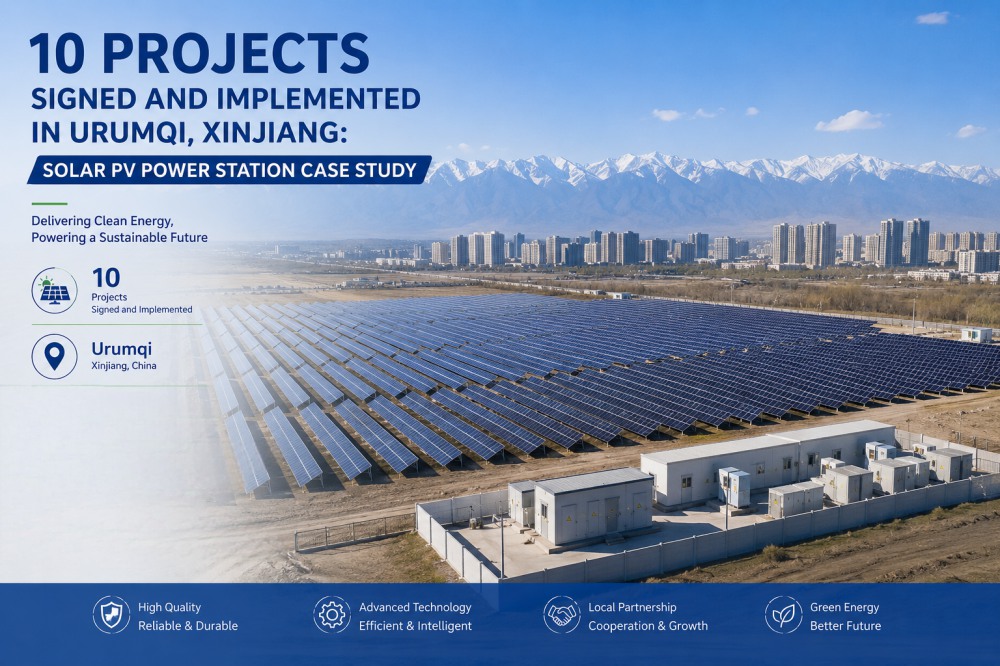
Over the past 18 months, our team signed and implemented 10 solar PV power station projects in and around Urumqi, the capital of Xinjiang. These projects range from 5 MW to 50 MW in capacity. Together they now generate over 485 GWh of clean electricity per year – enough to power more than 30,000 local homes and several industrial facilities.
This case study explains how we did it, what challenges we faced, and what results our clients achieved.
Why Urumqi? The Perfect Solar Location
Urumqi sits at the northern foot of the Tianshan Mountains. The region receives more than 2,800 hours of sunlight annually – over 7.5 hours per day on average. That is 15‑20% higher than the national average.
The local government actively supports renewable energy. Investors receive streamlined permitting, land incentives, and clear grid connection rules. For an EPC contractor, that means fewer delays and lower risk.
The 10 Projects at a Glance
| Project type | Number of projects | Total capacity | Primary customer |
|---|---|---|---|
| Utility‑scale solar farms | 6 | 210 MW | State grid |
| Industrial rooftop solar | 3 | 15 MW | Local factories |
| Hybrid solar + battery storage | 1 | 30 MW + 60 MWh | Industrial park |
All 10 projects are now operational. The first one came online in March 2025. The last one connected to the grid in February 2026.
How We Delivered: A Phased, Low‑Risk Approach
We did not build all 10 at once. That would have overwhelmed our local supply chain and subcontractors. Instead we used a phased rollout.
Phase 1 – Pilot project (months 1‑4)
We built a single 5 MW solar farm on land provided by a local energy company. This pilot allowed us to test equipment, train local crews, and refine our installation methods.
Phase 2 – Scale to five more farms (months 5‑10)
With the pilot proven, we added five larger farms ranging from 20 MW to 50 MW. We reused the same engineering designs and supplier relationships to speed up delivery.
Phase 3 – Rooftop and hybrid projects (months 11‑18)
While the farms were running, we installed rooftop systems on three factories. We also built one 30 MW hybrid plant with 60 MWh of battery storage to supply an industrial park.
This phased approach reduced risk and allowed us to catch problems early. By the time we started Phase 3, our local team had completed over 500 person‑hours of training.
Technical Highlights That Make a Difference
Bifacial Panels for Higher Yield
All ground‑mounted farms use bifacial solar panels. They capture sunlight from both the front and the back. The white gravel surface we installed reflects additional light onto the rear side. This simple design adds 8‑12% more energy output compared to conventional monofacial panels.
Smart Inverters with Remote Monitoring
We use string inverters with integrated power line communication. No extra data cables are needed. The inverters report the performance of every string to a central cloud platform. Our O&M team monitors all 10 projects from a single dashboard in Urumqi. If a string underperforms, we know within minutes.
Dust Mitigation for Desert Conditions
Dust is a major challenge in Xinjiang. Accumulated dust can cut panel output by 15‑20% within just a few weeks. We installed robotic cleaning systems on the ground‑mounted farms. These robots sweep the panels every morning before peak sunlight hours. The industrial rooftop systems use manual cleaning with compressed air, performed by factory staff we trained.
Battery Storage for Peak Shaving
The 30 MW hybrid plant includes a 60 MWh lithium‑iron‑phosphate battery. The battery charges during midday when solar output is highest. It discharges during evening hours when grid demand rises but solar production falls. This storage system reduces the industrial park’s reliance on coal power during peak hours by 40%.
Challenges We Overcame (And How)
Extreme temperature range
Summer surface temperatures exceed 50 °C. Winter lows drop below -25 °C. Standard inverters failed in early tests. We switched to industrial‑grade units rated for -30 °C to 60 °C and added active cooling fans that run when internal temperatures exceed 45 °C.
Sandstorms
Spring sandstorms reduce visibility and damage panel surfaces with abrasive particles. We chose panels with hardened anti‑reflective glass coating. The cleaning robots run after each major sandstorm to remove abrasive particles before they cause micro‑cracks.
Grid connection delays
The local grid operator has limited transformer capacity in some areas. We started grid impact studies early – before we even broke ground. We also pre‑purchased transformers for the two largest farms to avoid supply chain delays.
Local labor skill gaps
Solar installation requires specific electrical and mechanical skills. We set up a training centre in Urumqi. Over 120 local workers completed our 40‑hour certification course. Today 90% of our on‑site crew are Xinjiang residents.
Results After 12 Months of Operation
We collected data from all 10 projects for the 12 months ending April 2026.
| Metric | Result |
|---|---|
| Total electricity generated | 485 GWh |
| Average capacity factor | 18.2% (regional average: 16.5%) |
| Downtime due to equipment failure | 0.8% (industry benchmark: 2‑3%) |
| CO₂ emissions avoided | 380,000 tons |
| Local jobs created (construction + O&M) | 210 |
| Payback period for the pilot 5 MW farm | 5.2 years |
The hybrid plant with storage achieved the highest revenue per megawatt. It sells electricity at a premium during peak hours and earns additional income from frequency regulation services.
What Our Client Says
“We needed a partner who understands both the technical and the logistical challenges of building solar in Xinjiang. This team delivered all 10 projects on schedule and within budget. Their remote monitoring platform gives us real‑time confidence. We are already negotiating Phase 2.”
— Project Director, Urumqi Energy Investment Group
Lessons for Future Solar Projects in Desert Climates
If you are planning solar PV projects in similar semi‑arid regions, here is what we learned.
- Invest in dust mitigation upfront. The extra cost for robotic cleaners or anti‑soiling coatings pays back in less than two years through higher energy output.
- Start grid studies early. Do not wait for equipment procurement. Transformer lead times can exceed six months.
- Train local workers early. It takes longer than you think. But once trained, local crews have lower turnover and better knowledge of site conditions.
- Design for extreme temperatures. Standard equipment will fail. Pay the premium for industrial‑grade components rated for your actual temperature range.
- Consider battery storage where peak rates are high. The hybrid plant achieved the best financial returns, not just the lowest cost per kWh.
Common Questions About Solar Projects in Xinjiang
Q: What is the average solar irradiation in Urumqi?
Around 1,650 kWh per square meter per year, which is 15‑20% higher than the Chinese national average.
Q: How long does it take to get a grid connection permit?
Typically 3‑6 months depending on substation capacity. We recommend starting the application before you finalise panel procurement.
Q: Do you offer operations and maintenance services?
Yes. We provide remote monitoring, scheduled cleaning, and on‑call repair services for all projects we build.
Q: Can you build solar for industrial self‑consumption without selling to the grid?
Yes. Three of our Urumqi projects are behind‑the‑meter installations for factories. They use all the solar power on site and export nothing.
Q: What is a typical payback period for a solar PV station in Xinjiang?
Between 5 and 7 years for utility‑scale farms, depending on equipment costs and local electricity tariffs. Industrial rooftop systems with self‑consumption can pay back in 4‑5 years.
Q: Do you work with local EPC subcontractors?
Yes. We partnered with local civil works and electrical installation companies. All were supervised and trained by our senior engineers.