
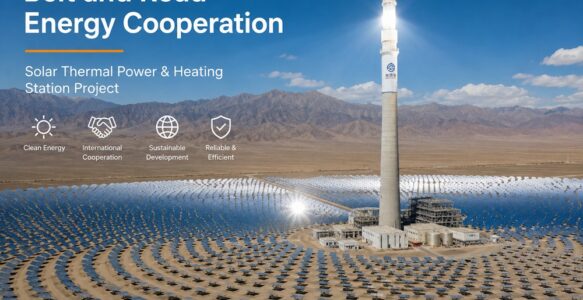
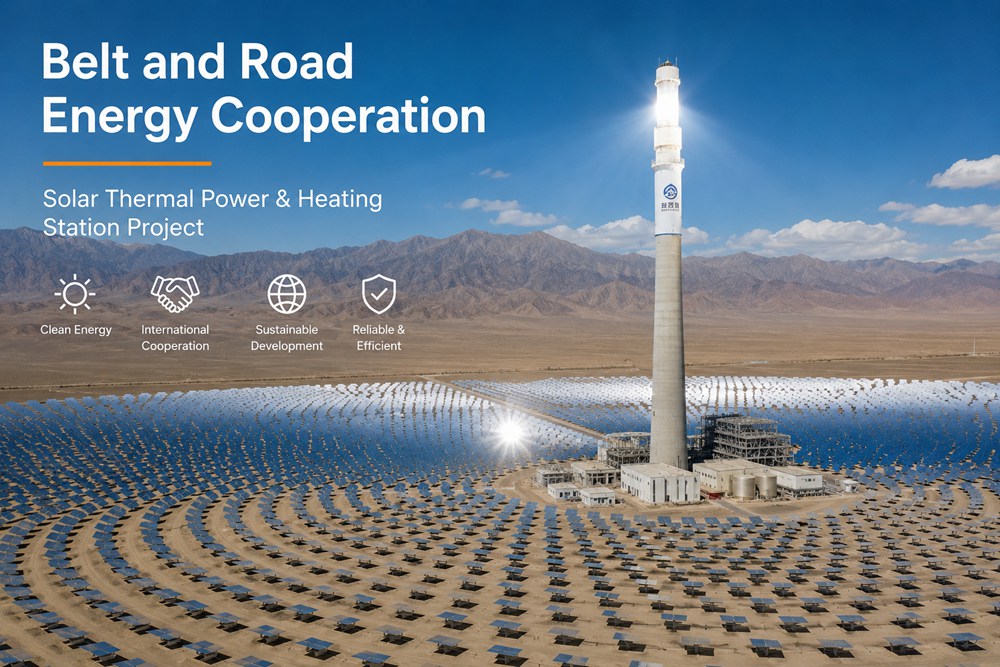
Powering a Central Asian Community with Clean, Reliable Heat and Electricity
Location: [Country name placeholder, e.g., “Khorezm Region, Uzbekistan”]
Project type: Parabolic trough solar thermal power plant with district heating
*Capacity: 25 MW electricity + 120 MW thermal for heating*
Status: Completed December 2025
Project Overview
Under the Belt and Road Initiative, our company acted as the lead EPC contractor for a first‑of‑its‑kind integrated solar thermal power and district heating station in Central Asia. The client, a regional energy utility, needed to reduce natural gas consumption for both power generation and winter heating. Local winters are cold (down to -15°C) and gas prices have been rising steadily.
We designed, procured, and constructed a 25 MW parabolic trough solar thermal plant that also supplies 120 MW of thermal energy to a nearby district heating network. The plant operates year‑round, with natural gas backup during extended cloudy periods. It now provides clean electricity to the local grid and heats over 15,000 homes.
Why Solar Thermal? Matching the Client’s Need
The client had two separate problems. First, their aging gas‑fired power plant was inefficient and expensive. Second, their district heating system relied on the same gas, making winter fuel bills painfully high. Solar photovoltaic (PV) could not help with heating. Solar thermal was the only renewable technology that could directly produce both electricity and usable heat.
Our solution uses parabolic trough collectors to concentrate sunlight onto receiver tubes. A heat transfer fluid (thermal oil) circulates through the tubes, reaching temperatures of 350‑380°C. This hot oil drives a steam turbine for power generation. After passing through the turbine, part of the steam is extracted and sent to a heat exchanger that feeds the district heating network. The remaining steam condenses and returns to the cycle.
During summer months, when heating demand is low, the plant operates in power‑only mode with higher electrical efficiency. In winter, we extract more steam for heating, sacrificing some power output but maximizing overall energy utilization. This flexibility was key to the client’s approval.
Technical Highlights
Parabolic Trough Collectors with Low‑Freeze Fluid
We installed 280,000 m² of parabolic trough mirrors supplied by a leading Chinese manufacturer. The collectors track the sun from east to west each day. The thermal oil has a low pour point of -30°C, eliminating the need for expensive trace heating during winter nights. The mirrors are washed weekly using a semi‑automatic cleaning vehicle we designed specifically for dusty conditions.
Thermal Storage for Evening Heating
A 4‑hour molten salt storage system allows the plant to continue delivering heat for two hours after sunset. Two tanks – one hot, one cold – store the salt at 380°C and 260°C respectively. This storage is sized to cover the peak evening heating demand from 6 PM to 9 PM, when solar radiation is gone but homes still need warmth. The client estimates this storage saves 30% of the backup gas that would otherwise be needed.
Integration with Existing District Heating Network
The existing heating network used water at 95°C supplied by gas boilers. Our plant supplies hot water at 110°C through a new heat exchanger station. We installed a booster pump and control valves to blend our supply with the existing gas boilers. The system automatically prioritises solar heat when available. The boilers only fire when the solar supply drops below demand or during maintenance.
Gas Backup for Reliability
No solar thermal plant can run 100% of the time. Winter cloud cover can last several days. We installed two high‑efficiency condensing gas boilers that kick in automatically when the thermal storage is depleted and solar irradiance is low. The boilers run on the same natural gas supply as before, but their annual consumption has dropped by 68%.
Project Challenges and Our Solutions
Challenge 1: Extreme temperature swings
The site experiences summer highs above 40°C and winter lows below -20°C. Standard thermal oil can freeze at -10°C. We selected a synthetic oil with a pour point of -35°C and installed trace heating on all outdoor piping that carries oil during winter shutdown. The trace heating is powered by a small PV array, so it does not draw from the grid.
Challenge 2: Dust and sand
The region has occasional dust storms. Dust reduces mirror reflectivity and can scratch glass surfaces. We specified a hard anti‑soiling coating on all mirrors. More importantly, we built an on‑site mirror washing station using recycled water. The cleaning vehicle runs twice per week in dry months, once per week in wetter seasons. Reflectivity is measured weekly and stays above 92% year‑round.
Challenge 3: Land availability and local permits
The chosen site is 180 hectares of previously unused desert land. The local government supported the project but required a full environmental impact assessment. We hired a local firm to conduct baseline studies for flora, fauna, and archaeology. The assessment found no protected species. We also arranged 30 public consultation meetings with nearby villagers. No one opposed the project after we explained it would reduce local air pollution.
Challenge 4: Skilled labour shortage
No local workforce had experience with parabolic trough systems. We set up a 6‑week training centre on site. Our engineers trained 120 local workers in mirror assembly, oil handling, turbine operation, and safety procedures. 85 of them passed the final exam and now form the core O&M team.
Project Results After One Year of Operation
We collected data from January to December 2026.
| Metric | Result |
|---|---|
| Electricity generated | 58,000 MWh |
| Thermal energy supplied to district heating | 210,000 MWh |
| Average plant availability | 96.2% |
| Solar share of total energy (electricity + heat) | 74% |
| Natural gas saved | 22 million m³ per year |
| CO₂ emissions avoided | 44,000 tons per year |
| Local jobs created (construction) | 280 |
| Permanent O&M jobs | 32 |
| Simple payback period (from client’s perspective) | 7.2 years |
The client’s original goal was to reduce gas consumption by 50%. We achieved 68% reduction. The district heating tariff has not increased for two years, and the utility expects the plant to operate for 25 years with moderate maintenance.
What the Client Says
“This was our first experience with solar thermal technology. The EPC team guided us through every decision – from collector selection to heat exchanger integration. They delivered on time despite a harsh winter during construction. Our citizens now enjoy cleaner air and stable heating prices. We are already planning a second unit.”
— Deputy General Manager, Regional Energy Utility
Why This Project Matters for Belt and Road Cooperation
The Belt and Road Initiative promotes infrastructure connectivity and green development. This solar thermal project demonstrates how Chinese technology can directly address the energy needs of partner countries – not just electricity, but also heat, which accounts for a large share of energy consumption in colder regions.
We sourced most of the major equipment from Chinese suppliers: mirrors, receiver tubes, thermal oil, turbines, and the molten salt storage system. Local content included civil works, low‑voltage cabling, and the district heating interface. The financing came from a combination of a Chinese development bank loan (65%) and the client’s own funds (35%).
The project has become a showcase for Belt and Road energy cooperation in Central Asia. Two neighbouring countries have already sent delegations to inspect the plant.
Lessons for Future Solar Thermal Projects
1. Start with a clear thermal load profile
We spent three months analysing the client’s district heating demand hour by hour for each month. This data determined the storage size and the backup boiler capacity. Without it, we would have over‑ or under‑designed the system.
2. Plan for winter mirror cleaning
Frost and snow reduce mirror output. We installed manual scraper bars on the collectors and trained operators to remove snow quickly. In the second winter, we added a low‑pressure hot water spray system that melts snow without damaging mirrors.
3. Include a maintenance workshop in the design
A dedicated workshop with spare mirrors, receiver tubes, and pumps reduces downtime. We built a 500 m² workshop next to the control room. It has paid for itself during two unplanned pump failures.
4. Engage local universities
We partnered with a local technical university to offer internships. Five graduates now work full‑time on site. They understand the local language and culture, and they have become our best ambassadors for future projects.
Common Questions About Solar Thermal Power & Heating Plants
Q: Can solar thermal work in cloudy climates?
Yes, with larger storage and backup. For this project, average winter irradiance is still adequate 85% of days. The storage and gas boilers cover the remaining 15%.
Q: How much land does a 25 MW plant need?
Our plant uses 180 hectares, including mirrors, storage, and all auxiliary buildings. That is about 7.2 hectares per MW of electrical capacity.
Q: Is solar thermal more expensive than PV?
Capital cost per MW is higher. But for applications that need heat, solar thermal avoids converting electricity back to heat, which is inefficient. The overall energy cost for combined heat and power is often lower.
Q: Do you offer EPC services for smaller heating‑only plants?
Yes. We have built solar thermal heating stations from 1 MW thermal for industrial process heat up to this 120 MW district heating scale.
Q: What is the typical lifespan?
Collectors last 25 years with regular mirror replacement every 10‑12 years. The thermal oil needs replacement every 15‑20 years. The steam turbine and balance of plant are designed for 30 years.
Ready to Discuss Your Solar Thermal Project?
Whether you need power, district heating, industrial steam, or a hybrid solution, our EPC team has the experience. We have delivered projects across Central Asia, the Middle East, and North Africa. We can handle feasibility studies, permitting, financing support, construction, and long‑term O&M.
Contact us to discuss your site conditions and thermal load profile. We will provide a preliminary system design and budget estimate.
Explore our other energy solutions: Solar battery power Stations | Hydrogen Generation | Natural Gas Power