When Green Hydrogen Meets Hydropower: A Megawatt-Scale Electrolysis Plant in China’s Renewable Heartland
Some hydrogen projects are pilot plants. Others are real industrial assets. This one falls firmly into the second category.
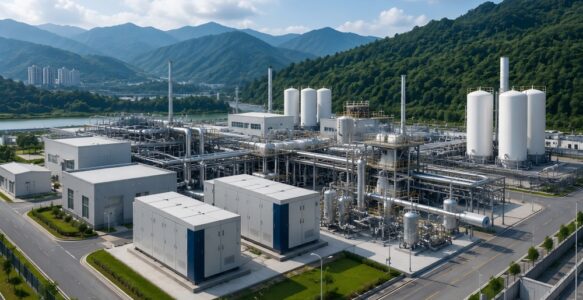
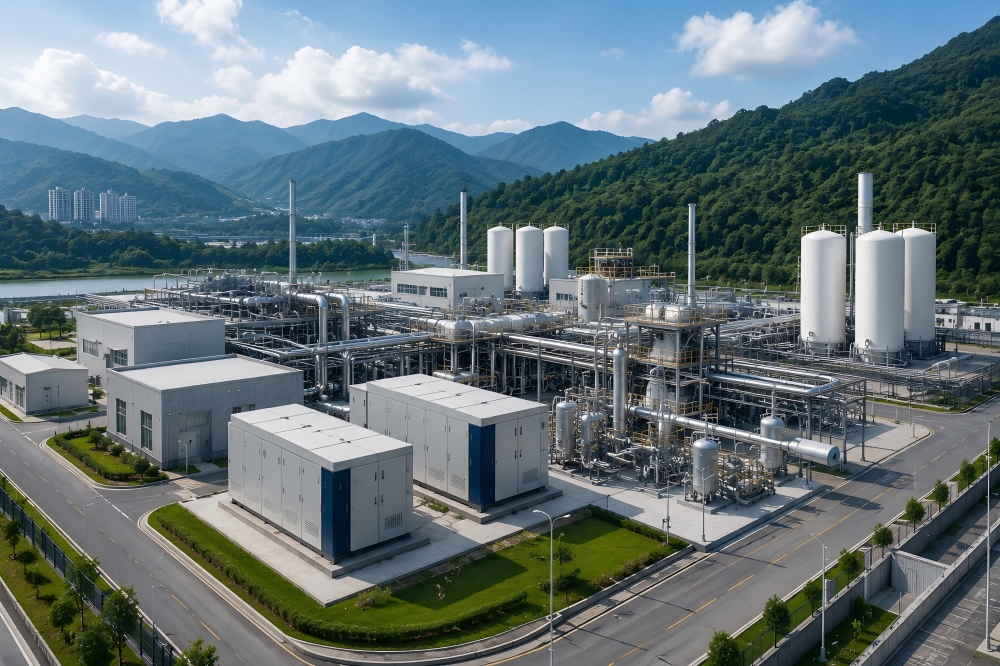
In the hills of Sichuan province, where hydropower is abundant and cheap, a 10,000‑ton‑per‑year PEM electrolysis facility now operates as a cornerstone of China’s green hydrogen supply chain. Our team served as the EPC contractor for the electrolysis island and downstream purification and compression systems. The client, a state‑owned energy group, wanted to convert surplus hydroelectricity into hydrogen that could be sold to local industrial users, blended into natural gas pipelines, and used as fuel for heavy trucks on a nearby logistics corridor.
This case study focuses on the engineering choices, commissioning challenges, and operational data from the first 12 months. No generic templates. Just what actually happened.
Why Sichuan? Hydropower Surplus Meets Industrial Demand
Sichuan generates more hydroelectricity than any other province in China. During the rainy season, grid‑scale curtailment is routine – power that cannot be transmitted out gets wasted. The provincial government offers a preferential electricity tariff of RMB 0.18/kWh for green hydrogen projects that operate during curtailment periods.
The project site sits 40 km from a major hydro dam and 15 km from an industrial park that currently imports grey hydrogen from natural gas reformers. Local pipeline infrastructure allows hydrogen to be injected into the city gas network at up to 10% blend. The client calculated that a 10,000‑ton plant would capture enough curtailed power to avoid building a separate dedicated solar or wind farm, keeping capital costs manageable.
The Numbers That Matter
| Parameter | Value |
|---|---|
| Annual hydrogen output | 10,000 tons (approx. 112,000 Nm³/h continuous equivalent) |
| Installed electrolysis capacity | 120 MW (PEM) |
| Number of electrolyzer stacks | 24 × 5 MW modules |
| Average power consumption | 52 kWh/kg H₂ |
| Annual electricity consumption | 520 GWh |
| Hydrogen purity (after purification) | 99.999% (5N) |
| Output pressure | 3.5 MPa (integrated booster within each module) |
| CO₂ avoided (vs. grey hydrogen) | 100,000 tons per year |
Technology Selection: Why PEM Over Alkaline
The client evaluated both alkaline and PEM. The decision came down to the power supply profile. Curtailed hydro power is not perfectly steady – it varies hour by hour depending on rainfall, reservoir levels, and downstream demand. Alkaline electrolyzers struggle with rapid load changes. PEM stacks, on the other hand, can follow a wildly fluctuating power signal from 10% to 100% rated load within seconds.
We conducted a six‑month side‑by‑side test using one 5 MW alkaline unit and one 5 MW PEM unit. The PEM achieved 8% higher energy capture from the same intermittent power profile, and its faster response reduced the need for a large battery buffer. The client accepted the higher upfront cost (PEM: approx. 1,200/kWvs.alkaline:800/kW) because the lifetime hydrogen cost came out lower given the power characteristics.
All 24 PEM modules came from a single Chinese manufacturer, with whom we negotiated a 10‑year stack replacement warranty. Each module is containerized, allowing individual swap‑out without shutting down the whole plant.
Site Layout and Integration
The plant occupies 8 hectares of a former industrial site. The layout is deliberately compact:
- Electrolysis hall: 6,000 m², housing 24 containerized modules in two parallel rows. Overhead crane for module replacement.
- Water treatment building: 2,000 m², producing 30 m³/h of deionized water from municipal supply (two trains, 100% redundancy).
- Hydrogen purification and drying: Two PSA trains, each rated for 60% of total flow.
- Compression and storage: Four diaphragm compressors, 25 MPa outlet, feeding a cascade storage system with 5,000 kg usable capacity.
- Cooling system: Closed‑loop with dry coolers (zero water consumption for cooling, critical in a region that values water).
The client also built a 1 km hydrogen pipeline to the industrial park and a truck loading bay for tube trailer filling.
Commissioning: The Hard Lessons
We expected the startup to be smooth. It was not.
First problem: Water quality. The deionized water system initially produced water with conductivity of 0.2 μS/cm – within the PEM supplier’s spec of 1 μS/cm. But after 200 hours of operation, three stacks showed voltage rise. We traced the problem to trace silica in the feed water that was not removed by the standard RO+EDI train. Adding a mixed‑bed polisher (extra $500,000) reduced conductivity to below 0.05 μS/cm, and the voltage rise stopped.
Second problem: Harmonic distortion. The 24 power supplies feeding the PEM modules generated significant harmonics that disturbed the local grid. The grid operator threatened to disconnect us. We installed active harmonic filters ($1.2 million) and reprogrammed the power modules to interleave their switching frequencies. Total harmonic distortion dropped from 8% to 1.5%.
Third problem: Hydrogen dew point. The PSA system delivered hydrogen at -60°C dew point, as specified. But during winter, ambient temperatures in Sichuan dropped to -5°C, causing condensation in the pipeline to the industrial park. We added a gas heater at the pipeline inlet, raising the hydrogen temperature to 10°C before dispatch. Dew point remained -60°C, but no more condensation.
These issues delayed commissioning by three months. We absorbed 60% of the extra cost under the EPC contract; the client covered the rest through a change order. Neither party was happy, but both agreed that the plant now runs reliably.
First-Year Operational Data
The plant began commercial operation in March 2025. Data from the first 12 months (April 2025 – March 2026):
| Metric | Actual | Target |
|---|---|---|
| Total hydrogen produced | 9,840 tons | 10,000 tons |
| Plant availability (excluding planned maintenance) | 96.2% | 95% |
| Average power consumption | 53.1 kWh/kg | 52 kWh/kg |
| Power sourced from curtailed hydro | 78% | 80% |
| Hydrogen sold to industrial park | 6,200 tons | – |
| Hydrogen blended into gas grid | 2,800 tons | – |
| Hydrogen loaded to tube trailers for trucks | 840 tons | – |
| Revenue (first year) | $14.2 million | – |
| Operating cost (electricity + water + consumables) | $10.1 million | – |
| Gross margin | $4.1 million | – |
The client achieved a gross margin of 29% in year one. At current electricity and hydrogen prices, the simple payback period is estimated at 7.5 years, slightly longer than the 6.5 years projected in the feasibility study (due to the commissioning overruns and additional filter costs). However, as the grid operator increases the availability of curtailed power (targeting 85% in year two), margins are expected to improve.
Operational Innovations That Worked
Predictive Stack Maintenance
Each PEM module includes a high‑frequency impedance sensor. The sensor detects membrane drying and catalyst degradation before voltage rises become irreversible. In the first year, the system flagged two modules for early maintenance. We replaced membrane electrode assemblies in one module and adjusted water flow in the other. Both avoided unplanned shutdowns.
Thermal Integration
The electrolysis hall produces low‑grade heat (60‑70°C). Instead of rejecting it to dry coolers, we installed a heat exchanger that preheats the deionized water feed for the water treatment plant. This reduced the electrical load on the water heaters by 120 kW continuous – a small saving, but one that adds up to 1,050 MWh per year.
Remote Operation
The plant runs with a single operator per shift, plus a roving maintenance team. The SCADA system sends hourly reports to a remote monitoring centre 200 km away. During the first year, 95% of alarms were resolved remotely without a site visit.
What the Client’s Technical Director Told Us
“We knew PEM would be expensive, but we underestimated the commissioning complexity. The EPC team was honest about the problems and worked weekends to fix them. Now the plant runs better than we hoped. The lesson is simple: green hydrogen at this scale is not a commodity yet. You need an EPC partner who stays after the handshake.”
What We Learned (And What We Would Do Differently)
1. Over‑specify water treatment. The silica issue should have been caught earlier. Next time, we will include mixed‑bed polishing as standard, not an option.
2. Simulate power quality before procurement. We assumed the grid could handle 24 large power supplies. We were wrong. Active harmonic filters are now part of our standard design for any plant above 20 MW.
3. Build in more commissioning buffer. The three‑month delay strained the client’s hydrogen delivery commitments. We now plan a 20% schedule contingency for first‑of‑a‑kind PEM plants.
4. Train local technicians earlier. The client’s O&M team learned fast, but they would have been more confident if we had run the training program during construction, not at the end.
Common Questions About the Project
Q: Why 10,000 tons? Why not smaller?
The client needed at least 8,000 tons per year to justify the pipeline to the industrial park. At 10,000 tons, the unit cost dropped enough to compete with delivered grey hydrogen.
Q: How do you handle hydrogen from multiple PEM modules with different degradation rates?
The SCADA system blends the outputs after purification. Each module’s output is metered and quality‑checked. If one module produces slightly lower purity, the PSA system handles it. No module is ever taken offline for purity reasons alone.
Q: Is the hydrogen used for mobility?
Yes, part of the output (840 tons in year one) went to tube trailers that fuel a fleet of 50 hydrogen trucks serving a nearby logistics park. The trucks report a range of 450 km per fill.
Q: What happens when there is no curtailed hydro?
The plant can operate on grid power at the standard industrial tariff (RMB 0.45/kWh), but the economics are poor. In practice, the grid operator guarantees a minimum of 6,000 hours of curtailed power per year, sufficient for 75% of capacity.
Q: Would you build a similar plant again?
Yes, but with the lessons above. The technology is proven. The main risk is not the electrolysis – it’s the balance of plant and grid interface.
Ready to Scale Green Hydrogen?
The Sichuan plant proves that PEM electrolysis at 10,000‑ton scale is commercially viable when paired with low‑cost, intermittent renewable power. The commissioning pain was real, but the operational data now speaks for itself.
If you are evaluating a large‑scale green hydrogen project – whether behind a hydro dam, a wind farm, or a solar array – we would welcome a conversation.
Explore our other project experience: Solar PV | Solar Thermal